


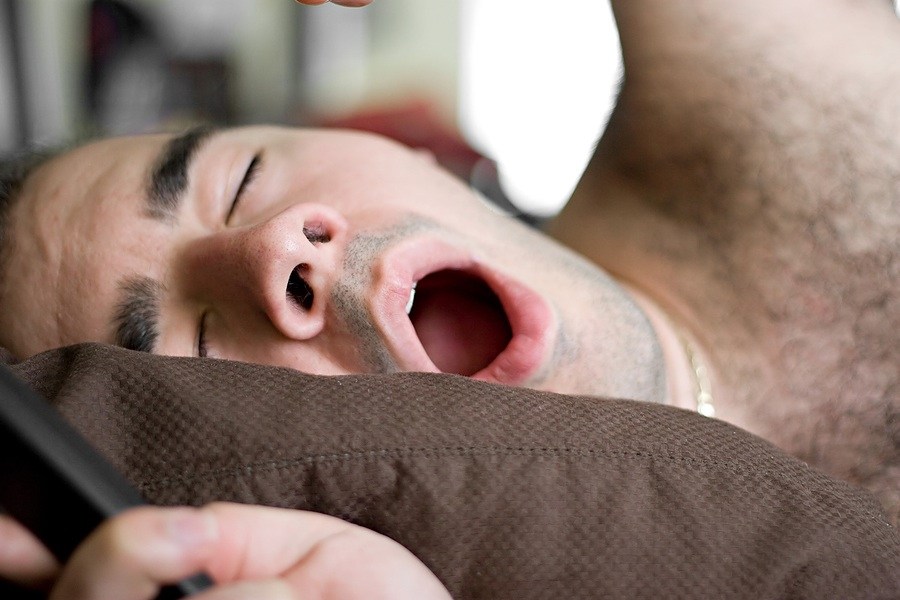
In sleep disorders, obstructive sleep apnea is the most common condition that’s seen, but a significant number of people with obstructive sleep apnea will also have central sleep apnea. Central sleep apnea is thought to be a condition that’s associated with a number of different neurologic problems, as well as heart or kidney failure. During the night, people with central sleep apnea stop breathing when signals in the brain that tells the body to breathe don’t work properly. No effort is even made to inhale. In contrast, with obstructive sleep apnea, an effort is made to breathe in, but because of collapse in the upper airways, air can’t get into the lungs.
Unfortunately treating central sleep apnea is more of a challenge than treating obstructive sleep apnea and the best way of treating this condition is to use a variation of CPAP as a respirator This is a servo ventilator feature thats found in machines that can treat this condition When it senses that youre not breathing it literally breathes for you rather than applying constant positive pressure for obstructive events Some people will have a combination of obstructive and central events which is called mixed or complex sleep apnea
A number of different neurologic conditions can cause central sleep apnea but heres a simpler explanation
We know that a HUGE number of people have undiagnosed obstructive sleep apnea Up to 14 of all men and 110 of all women have it and by the time youre 60 or 70 the vast majority will have at least some degree of sleep apnea If youre human and you can talk then youre susceptible to breathing problems at night even if you dont suffer from any apneas The reason is that complex speech and language development unprotected our upper airways and everyones tongue can fall back and obstruct your breathing at night especially when youre in deep sleep due to muscle relaxation
Ive also talked about how modern humans jaws are shrinking due to a radical change in our diets and the addition of bottle feeding This had lead to increased rates of dental crowding with more and more people needing braces The smaller the jaws the less space there is for the tongue which can take up too much space ultimately crowding the airway
We also know that theres a linear correlation to complications of apneas even in the very low range where having an AHI of 4 is significantly worse than having an AHI of 2 although officially you wont have obstructive sleep apnea since you come in below 5 Sleep apnea patients are also known to have thick or viscous blood that tends to clot easier when there are areas of low blood flow or small vessel constriction People with obstructive sleep apnea by definition have smaller vessels and low blood flow simply due to the massive stress response that naturally constricts blood vessels and causes hypertension
Numerous imaging studies also show that people with obstructive sleep apnea have much higher numbers of lacunar infarcts which are small areas of dead brain tissue thats normally seen in routine CT scans of the brain Other studies reveal lower blood flow metabolism and brain tissue density in certain critical parts of the brain that control memory executive function and autonomic function Areas of the brain that address hearing including the high frequency sound perceiving areas of the inner ear are also extremely sensitive to instances of low blood flow or stagnation One recent study showed that people with sleep apnea had lowered auditory brain stem reflexes but after treatment with CPAP or after thinning patients blood concentrations these auditory reflexes improved
One finding thats fascinating is that parts of the brain that control breathing are also affected preferentially by these events Knowing that even mild levels of sleep breathing problems can aggravate various levels of clotting and vessel blockages if you happen to clot off a small vessel that leads to this area then your neurologic breathing patterns can be affected These same areas also control autonomic function which includes heart rate temperature digestion sweating and vascular reflexes Damaging even a small part of the brain in this area can wreak havoc on your breathing patterns as well as other regulatory functions that control your bodys organs
Since we know that obstructive sleep apnea is strongly associated with heart disease it makes sense that central sleep apnea is commonly seen in patients with heart disease Not only can obstructive sleep apnea cause heart disease by applying this model it can also cause central sleep apnea Poor involuntary nervous system control especially of the heart can wreak havoc on heart function It can also cause problems with digestion and even your hormones
Although we have a way of treating central sleep apnea the results are not as satisfying compared with treating obstructive sleep apnea Ultimately sleep doctors dont have very good answers to why this happens or how to treat it effectively Think of it as a permanent neurologic condition where rather than having weakness of your lower legs you have weakness of the nerves that control your breathing patterns Treating the obstructive component probably wont cure the central sleep apneas but at least it could prevent it from getting worse
If you feel you may have OSA or CSA Alaska Sleep Clinics board certified sleep specialists are ready to help Call us today for your FREE sleep assessment
Visit the Alaska Sleep Store