


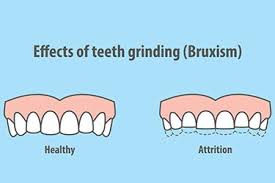
What is tooth grinding and why to people do it
Tooth grinding is the unconscious involuntary rubbing of the top teeth against the bottom teeth It is caused by tension in the fast twitch muscles in someones jaw
As tooth grinding is caused by muscle tension it is far more likely to occur in an individual who suffers from high levels of stress or anxiety Given that grinding is an involuntary reflex it tends to occur when people are not in a state of awareness about the movement in their jawusually during periods of sleep or intense concentration
Although the most common cause of tooth grinding is stress it is also more likely to occur in individuals who have crooked or missing teeth This is because having misaligned or missing teeth makes it more difficult for your jaw to find a comfortable resting position Grinding therefore occurs as your jaw moves around in vain to find this comfortable resting position
How can I tell if I grind my teeth at night
Although you will not experience the sensation of grinding your teeth while you sleep the following signs may suggest that you do indeed grind at night
You regularly wake up with headaches
Grinding your teeth can put a lot of strain on the muscles in your jaw These muscles are primarily located on the side of your head near to where your temples are
The strain on these muscles can cause headaches soon after waking that slowly fade during the day If you regularly suffer from these types of headaches then grinding your teeth at night may well be the cause of this
You make loud clicking or cracking noises at night
The sound of your teeth rubbing together can often be loud enough for people close to you to hear Therefore if your partner or someone sleeping nearby complains that you make cracking or popping noises while you sleep this again could be a sign of tooth grinding
You notice wear on your teeth
Tooth grinding gradually wears your teeth down Therefore if you begin to notice that your teeth are getting shorter or less sharp at the edges it could be that tooth grinding is what is causing this change A dentist can quite easily detect if you are grinding your teeth by looking out for this type of wear
What can happen if night time tooth grinding is left untreated
Chronic long term tooth grinding can damage your teeth in several ways

On a cosmetic level tooth grinding can gradually wear down your teeth leading to shorter and less sharp teeth This can lead to a gummy smile which is generally not considered attractive Often people choose to have this corrected with veneers which can be really expensive
In terms of oral health grinding your teeth at night can damage tooth enamel making your teeth more susceptible to chips cracks and cavities
Perhaps the most damaging long term effects of grinding your teeth while asleep are its effects on your mental health Regularly waking up with a headache can be incredibly draining and make challenges at work and home even more stressful than usual
Given that people who grind their teeth at night are more likely to be experiencing stress anyway suffering painful headaches most mornings can only add to this stress
This can lead some sufferers of tooth grinding down a vicious cycle of stress making them grind their teeth at night and then this grinding causing them to wake up with headaches only adding to their levels of stress
How can tooth grinding be treated
Given that tooth grinding is predominantly caused by stress figuring out how to manage stress can go a long way to reducing the amount you grind your teeth at night
The best way to manage stress is a very personal matter however reducing physiological stressors is always likely to help The best way to do this is to minimize your intake of caffeine avoid smoking and avoid exercising very soon before bed
Mindfulness can also work very well in reducing the amount you grind your teeth Not only can mindfulness reduce stress but it can also make you more aware of the tension that you naturally carry in your jaw
People who grind their teeth at night are very likely to have tension in their jaw even when they are awake Being more aware of this tension and consciously trying to relax the muscles in your jaw when you are awake can make you less likely to grind your teeth at night
Magnesium supplements can also be effective in reducing tooth grinding Magnesium helps with fast twitch muscle control It is sometimes used as part of a wider treatment for Parkinsons Disease for this exact reason A combination of reducing stress and taking magnesium supplements every day can be enough to eliminate night time tooth grinding altogether
For those whose tooth grinding is more persistent a specialised dental appliance worn at night could be the best solution to stop tooth grinding
This appliance is made out of acrylic and is thin enough to be worn at night without making sleep difficult It works by keeping the teeth in their most natural resting position thereby reducing ones reflexive urge to grind their teeth
The acrylic also acts as a shock absorber to make sure that any tooth grinding does not actually negatively impact your teeth
Finally given that tooth grinding is more likely to occur if you have misaligned or missing teeth tooth replacement options such as dental implants or straightening your teeth by the way of orthodontic treatment may also help to reduce the amount you grind your teeth
That being said the use of the dental sleeping appliance in conjunction with trying to minimize the stress in your life should be enough to eliminate tooth grinding entirely
OSA and Dental Considerations

Obstructive Sleep Apnea OSA is a potentially serious sleep disorder in which a childs breathing stops and starts during sleep Child OSA is most commonly found in children between the ages of 2 and 6 but can occur at any age
There are a variety of treatments for OSA Some of the most common devices to help are a Continuous Positive Airway Pressure machine CPAP mouth appliances and specially designed pillows Dentofacial orthopedics is another option for early treatment and even prevention of OSA
These orthopedics can open the airway 10mm or more by developing a facial profile to an optimum situation which is a process to increase the airway space Treatment can be started as young as 2 years old and can help your child to reach the maximum sleep potential by reducing problems with breathing swallowing and sleeping
Other oral treatments include a Mandibular Repositioning device and a Tongue Retaining device These devices open your airway by bringing your lower jaw forward during sleep They are acrylic and fit inside your mouth much like an athletic mouth guard Others may fit around your head and chin to adjust the position of your lower jaw as well
Dental devices are only effective for mild to moderate sleep apnea There are also a number of possible troubling side effects from using the dental the devices to include soreness saliva build up nausea and damage or permanent change in position of the jaw teeth and mouth
It is very important to get fitted by a dentist specializing in sleep apnea Also see your dentist on a regular basis for any dental problems that may occur and check with your sleep specialist to see if you are a proper candidate for OSA Alaska Sleep Clinic works together with local dentists in your area to help get you the best treatment possible for your sleep apnea if CPAP is not working for you
Call us today to find out more at 907 770 9104
Author Bio Dr Ron Baise is a dentist with over 35 years experience He is an Associate Dentist at 92 Dental a practice in London England