

The world has entered a chaotic state with the novel coronavirus also known as the COVID-19 outbreak. While medical experts and scientists are learning and researching this extremely infectious pathogen, reports show different statistics.
For some, mostly younger and healthy people the effects are mild or asymptotic, but for those older with other chronic conditions, the disease is quite lethal. Given that obstructive sleep apnea is a condition that affects sleep aspiration, it’s important to highlight potential coronavirus concerns for patients with sleep apnea.
What Is Obstructive Sleep Apnea?
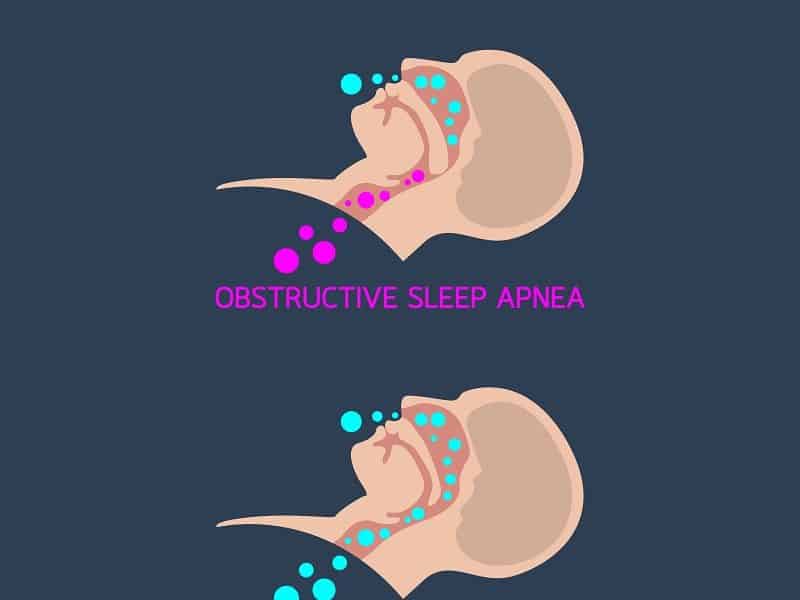
Sleep apnea is a condition that mostly manifests during sleep, and over time, it can have serious health implications. Patients who suffer from sleep apnea experience shortage and stopping of the breathing cycling. It manifests by patient stopping and starting to breathe again, causing snoring, shortage of breath, and gasping for air.
It’s hard to notice it medically, but patients can recognize it if they find themselves snoring or someone else tells them that they do. Another way patients recognize it is by noticing they feel weak and tired even after a full sleep cycle.
As a medical study published in 2017 shows, the most common type of sleeping apnea is obstructive sleep apnea which occurs when throat muscles relax.
Other types of sleep apnea include central sleep apnea which manifests when the brain doesn’t send and receive the necessary signals for muscles in the throat that help control breathing.
Lastly, the complex sleep apnea syndrome which is the previous two conditions joined up. It is also known as treatment-emergent central sleep apnea which requires the use of proper ventilation machines to soothe sleeping.
More: How Does Sleep Apnea Impact the Brain?
What Causes Sleep Apnea?
The broader symptoms of sleep apnea include loud snoring, episodes of a shortage of breath, gasping for air, waking up feeling thirsty and having a dry mouth, morning headache, insomnia, laziness, and daytime fatigue and concentration problems.

Certain factors can cause and result in sleep apnea.
Being overweight or obese – Obesity is the main factor that affects and raises the risk of developing obstructive sleep apnea. It happens when the fat gathers around the upper airway of your respiratory system causing “obstruction” of your breathing. There are a lot of studies on the relationship between obesity and sleep apnea and many of them show that reducing weight could minimize and even eliminate the symptoms of sleep apnea.
Neck circumference – There are a lot of people with thicker necks that can easily extend into ongoing sleep apnea. That’s a result of more narrow airways.
Narrow throat – Similarly to the neck condition, a narrow airway can result in an improper position of tonsils and adenoids, and when they enlarge they can block the airway eventually resulting in sleep apnea.
Gender – A very old but compelling and detailed study showed that sleep apnea is more commonly found in males than females.
Age – While there are situations where sleep apnea occurs in younger people too, it’s most commonly occurring in older people with weaker respiratory functions.
Smoking – Given that smoking already takes a toll on the respiratory system in itself, it doesn’t surprise that smoking too enhances sleep apnea. Research has shown that smokers are three and more times more susceptible to develop obstructive sleep apnea.
Alcohol and drugs – Different studies found that abusing alcohol, sedating, and tranquilizing drugs, as well as their combinations, can worsen the conditions behind obstructive sleep apnea.
Lastly, It’s important to check whether someone in your family also suffers from this condition, as there’s a possibility that the family history also has a lot to do with it and increase your risk.
Read More: How Does Alcohol Affect Sleep?
Does The Coronavirus Pose Risk For Patients With Sleep Apnea?
As mentioned above, doctors are still learning about the conditions that cause the coronavirus symptoms to worsen. The most common factors that see the patients’ states deteriorating and eventually passing away are health conditions and age.
However, sleep aspiration can also be the cause of this virus to get worse. That said, sleep apnea patients whose state is serious enough that they have to use a CPAP may also be the risk group, especially because sleep apnea is related to other conditions too.
Different chronic conditions
The coronavirus mortality rate increases in patients with underlying chronic health conditions. In most cases, that’s diabetes, a heart condition, kidney disease, lung conditions, and other respiratory issues.
Given that sleep apnea has a relationship with other conditions like cardiovascular problems, as well as diabetes it’s important to admit that there are possible coronavirus concerns for patients with sleep apnea.
Age
The statistics have shown that patients older than 65 years have been more susceptible to coronavirus-caused pneumonia that proved to be lethal to them. Scientists believe that age susceptibility is due to the overall weakening immune system which then results in deadly pneumonia and the urgency of using mechanical ventilation.
One of the factors that cause sleep apnea is age, as patients, older than 65 years have been experiencing it more frequently. As a result of this connection, it’s natural to conclude that there are age-related risks for sleep apnea patients when it comes to the lethality of the novel coronavirus.
Obesity
As the risk factors state, people who are obese are more likely to develop obstructive sleep apnea. That is a result of fat deposits making the neck appear thicker and blocking the upper respiratory ways, not to mention the obesity-related features like kidney disease and diabetes. All these are also more prone to coronavirus consequences. As the World Obesity Federation states, obese people, as a result of their lifestyle can also develop severe symptoms of the COVID-19 and end up needing mechanical ventilation, decreasing the likelihood of successful recovery.
With that in mind, there’s a clear connection between patients who use CPAP machines as a result of sleep apnea as well as COVID-19 consequences.
Sleep Aspiration
Another connection between the coronavirus and sleep apnea would be in improper sleep aspiration.
Note: What makes COVID-19 more lethal and dangerous compared to the common cold and flu is that it mostly doesn’t manifest with nasal or throat infection, but directly attacks the lungs, causing intense coughing and difficulties breathing.
It starts by attacking the cells located under the vocal cords and throat and makes its way towards the lungs. It happens thanks to inhaled air, but it can also be contracted through fluids in the nose and saliva. Additionally, contact by hand with the eyes, nose, or mouth can also transfer the virus.
Aspiration commonly occurs when we’re asleep. There are aspirated fluids that can potentially carry the bacteria, viruses, and other pathogens to the lungs, leading to pneumonia, especially if patients are older or having damaged lungs. Damaged lungs can be a result of asthma, alcohol, smoking, and others.
Note: If you use a CPAP device to control your sleep apnea, it’s important to practice common and good hygiene of the device, taking different safety measures to keep it disinfected and clean. That doesn’t mean you should stop using your device, as the CPAP device is crucial if you want to remain healthy and rested while suffering from sleep apnea.
How Can Patients With Sleep Apnea Keep Themselves Protected From The Virus?
Fortunately, not everything is dreadful for sleep apnea patients. There are ways to keep themselves healthy, rested, and protected whether their sleep apnea is severe or not, and regardless of the CPAP machine usage. Read below.
1. Practice good sleeping hygiene
 Terry Cralle, RN, MS, CPHQ
Sleep is one of the best ways to keep your immune system strong and protected. When we indulge in deep sleep sessions, our muscles and cells are restoring. That is a result of a strong and healthy immune system, which can also fight bacteria and pathogens among which coronavirus is. According to the numerous research, healthy sleep hygiene is one of the most important conditions for your immunity to fight the viruses off.
With that in mind, it’s important to lay down before midnight, sleep on your side, and avoid using smart devices during late hours. If your sleep cycle is adequate, not only you will feel more rested and energized, your immunity will also help fight the bacteria.
2. Keep yourself nourished and clean
It’s no secret that washing hands has always been important for practicing proper hygiene. After all, coronavirus shouldn’t be the only reason for you to always wash your hands, face, and teeth. This especially applies if you’re a CPAP machine user. They can unconsciously touch their face, or even the machine while forgetting to wash their hand beforehand. Sanitize and wash your hands regularly, and don’t touch the CPAP device first thing you come home. If you have to cough or sneeze, cover your face with your elbow being bent, don’t cough into your hand that will later touch the device.
Additionally, it’s important to keep taking warm and relaxing bathes which contribute to better night rest and muscle relaxation, which also soothes sleeping hygiene and nourishes it.
3. Keep your CPAP device away from others
Needless to say, if you live with children, it’s obvious that they like to touch everything and it’s become a commonplace to keep the things that can harm them away. The CPAP machine isn’t something that can necessarily harm them, but it can do you harm if you keep it in their reach during these times. The children are said to have a nearly asymptotic manifestation of the virus itself, but that doesn’t mean they aren’t infectious.
To add an extra safety measure, keep the machine out of their reach, as well as the reach of your friends or visitors that come by. If you find out someone contacted with it, clean and disinfect it immediately.
4. Sanitize frequently
If you want to be extra-secure about the exposure to the virus, you should clean and sanitize your CPAP machine frequently. Try to clean it daily, as no harm should come from that. You will have to sanitize the entire device, including the masks, tubing, and even the water chamber. Also, don’t forget to wash your hands and face before you start using the device.
5. Clean the filter
Filter cleaning and replacements are important to protect your respiratory system from unwanted consequences. Usually, the filter manufacturers provide instructions on how to clean it and replace it. If you don’t have a habit of washing and cleaning your filter it’d be good to replace it on a monthly or even weekly basis, but if you’re prompt with the hygiene of your CPAP machine, it’s as good as 6 months.
6. Keep in touch with the doctor
Lastly, it’s important to maintain proper CPAP theory with the specialist who prescribed it. That’s why it’s important to both maintain the right CPAP therapy and compliance. The doctor will help you in case if you need to change something regarding your therapy or whether or not you should still use it.
Needless to say, the accurately prescribed sleep apnea treatment will increase the likelihood of your remaining healthy at these times, while also shielding you from developing severe health problems. If your doctor says you should continue using the CPAP machine, you should continue.
A quick study by the National Academy of Medicine concluded that the use of CPAP and BiPAP machine resulted in helping patients overcome symptoms of coronavirus and keep them minimal.
Final words
Lastly, don’t forget to be on the watch for potential coronavirus symptoms. The most common symptoms of the novel coronavirus are mild to high fever, persistent, dry cough, and difficulties breathing. If you know someone who has manifested the early symptoms, it’d be the wisest to stay away from them and self-isolate.
In most cases, the incubation will take up to 14 days to manifest, although in many situations the pathogen manifests its first symptoms five to six days after being contracted. Finally, stay at home and stay away from the places that could potentially jeopardize your health.