

For most babies that sitting position should be avoided until the neck can support the heads weight
However several findings and research available showcase how sleeping positions can also affect motor development in babies
According to a study published by Parenting Science more than 50 of infants can sit up unsupported by six months start crawling by eight and half months stand unassisted by ten and a half months and walk unaided by 12 months
However every baby is different as the motor development milestones can either be achieved earlier or later Nevertheless strong theories suggest that babies sleeping position is important as it can affect their motor development
So lets take a quick look at some of the ways the sleeping position of babies can impact their motor skills development
Baby Sleeping Positions What Is Safe And What Is Not
Here are the top four reasons that perfectly explains why you should focus on the sleeping position of your newborn
Front Sleeping
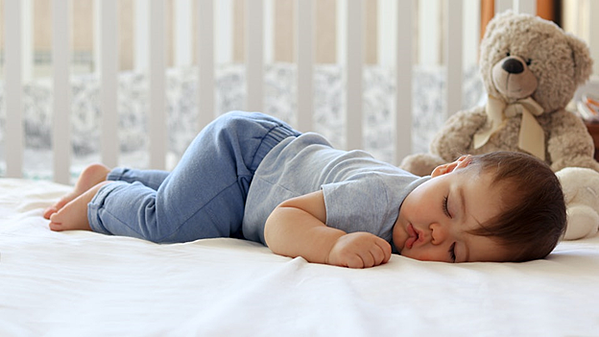
A question that has haunted parents universally across the globe is whether a baby should be allowed to sleep on their stomachs or not Babies are fragile and they need support as well as a lot of care Therefore finding the safest sleeping position should be given its due importance
The most prominent proponent that outright prohibits front sleeping position or babies sleeping on their tummy is SIDS Sudden Infant Death Syndrome According to various studies babies that are less than one year old are at high risk of SIDS as there are chances of a decrease in blood pressure and heart rate control when they sleep on their tummies
Other studies suggest that belly sleeping can be a problem because it may cause an obstruction in the airways and thus cause babies to breathe on their own exhaled breath This can make it harder for the body to escape the heat and cause the babys system to overheat
Hence you will hardly find any professional doctor out there that would recommend that you let your baby with their front side down
Sleeping on the Back
According to many professionals sleeping on the back is most advisable sleep position however it has been found that while babies sleeping on their backs are safe their motor developments can be slower This however certainly doesnt mean that babies that sleep on their back do not achieve milestones at all
In fact sleeping on the back is probably the safest position for infants and while motor developments may be a tad bit slower than those compared with babies that sleep on their tummies sleeping on the back is still most advisable Many parents might consider the notion of putting their babies on their tummies since front sleeping positions often induce much deeper sleep in infants
However they dont know that the potential risk that they might put their tiny one through is immensely harming their safety
Supine vs Prone Position
It all comes down to the debate about whether a Prone or Supine position is best for babies The supine position is where the face or the torso is facing up and the prone position of sleeping is facing downwards
It is interesting to know that the threat of SIDS which is a major reason doctors recommend supine position for babies actually lowers down at an incredible rate with age
Babies that have crossed their first birthday or are more than a year old are much less at risk This is why after your baby is a year older you as a parent may consider letting them choose their own position Babies around six months or older can easily role themselves in both ways without assistance At this stage it is generally considered to be OK for your little one to decide which way they want to sleep
Tummy Time
Tummy Time is the period during the day where your baby spends awake on their stomach Apart from sleeping positions Tummy Time for babies has been supported by several research types to be considered vital for babies motor development
This is why babies who are let to sleep in a prone position can develop motor skills much earlier than those who sleep in a Supine position There are several reasons why tummy time plays an essential role in motor development in babies
Babies can begin tummy time as a newborn and this can continue for the rest of the babys first year What tummy time does is that it allows for the core muscles of your baby to develop
This includes the back neck and shoulder regions As a parent you should aim to achieve an hour of tummy time per day by three months of age For newborns you can start with as little as a few minutes at first With the passage of time as your baby grows and gets stronger you can build towards longer tummy time sessions
However once your baby starts to crawl the need for tummy time is no longer necessary because by then their motor development will be focused on moving themselves from one spot to another Nevertheless there is no doubt that babies prone position during play is best for helping them develop motor skills
Prevention of SIDS
The Sudden Infant Death Syndrome is defined as the unexplained death of a baby younger than 1 year old Even after an investigation or autopsy may be carried out infants who have suffered from SIDS their death may remain unexplained or a mystery in the clinical history
According to a recent study by Master Thesis UK there are around 3500 sudden and unexpected infant
 deaths in the United States Infants less than 1 year old are most prone to such fatalities that have no immediate or apparent causes
Hence I think it is imperative for parents to understand some of the precautions they can take to rectify such a terrible and harrowing event Here are a few pointers for you to follow
First and foremost always make sure that your baby is placed on their back to sleep at night and even during daytime naps
Babies that are put on their stomachs for naps are at very high risk for SIDS especially those who are less than one year old
A firm and flat surface are best for the baby Always look for a safety approved crib with no other bedding or soft items in the sleeping area and covered with a fitted sheet
Breastfed babies have been found to have a lower risk of SIDS as a mothers milk has incredible benefits for the babys health and growth
For smaller babies avoid putting them in separate rooms Instead consider it your duty to share the room with newborns and keep young babies close to our bed ideally for babies that are six months or younger
Avoid putting soft objects over the baby or anywhere near the babys sleep area
Women especially should quit smoking drinking alcohol and the use of marijuana or any other illegal drugs during pregnancy and even after the baby is born
Pacifiers for naps and nighttime sleep can also help reduce the risk of SIDS
Make sure that baby stays cool and not too hot during sleep
Always follow the guidance regarding babys vaccines and regular health checkups
Tummy time during the day and playing hours also help tremendously decrease the risk of SIDS
Tips For Parents To Keep Their Sleeping Baby Safe

Read on to know some essential parental tips that will help you to ensure that your baby sleeps safely
1 Beginning Sleep on Back
As mentioned above babies should always be let to sleep on their backs even though research shows that babies that are allowed to sleep in a prone position develop motor skills earlier than supine sleepers The risk to your babys life is a much graver concern than motor development
2 Finding Their Own Position
When babies can reach the milestone of turning themselves naturally you can let them choose their own positions Even then it would be much safer to make your babies sleep on their backs for at least a year
3 Medical Reasons That Contradict
At times doctors would inform you of a problem that your baby has and only under those circumstances should you follow their advice to let your baby sleep in the prone position Other than that sticking with a supine position is best for your baby
4 Sleeping on Side Also Not Advisable
It is essential to understand that babies tend to move during their sleep so allowing them to sleep on their side is also not advisable as they might trip or rollover into a dangerous position
5 Reducing the Risk of Flattened Head Back
Babies who spend too much time lying on their backs may be inclined to the risk of developing a flattened head or back This is where tummy time during the day is extremely important
Conclusion
Choosing the best sleeping for your baby can be tricky as every baby is different Nevertheless a supine sleeping posting for the first year with plenty of tummy time during awake and play hours is best for your babys motor skill development
Unless your baby is inflicted with a medical condition where doctors advise you a particular position for your babys sleep hours the prone sleeping position should be avoided
ARE YOU CONCERNED ABOUT YOUR CHILDS SLEEP HABITS
A good nights sleep is essential to the growth and development of children and children require much more sleep than adults Sometimes however children are unable to get the necessary amounts of nightly sleep that they need and it can sometimes be attributed to a sleep disorder
At The Alaska Sleep Clinic we provide consultation and therapeutic management for a wide variety of pediatric sleep disorders We understand that your childs health is important to you and we want to assure you that our Board Certified Sleep Physicians are highly adept at treating child sleep disorders
Download The Pediatric Questionnaire
With one on one patient treatment and one of the ONLY sleep labs in Alaska with a Pediatric Medical Director it is important to us that our physicians are trained in communicating with children of all ages and are experienced in calming the fears of nervous young patients while providing quality care for them in a relaxed non threatening environment
Author Bio
Stella Lincoln currently works as a Health Advisor at Dissertation Assistance UK This is where higher education students can acquiring professional support from experts specializing in their field of study You can connect with Stella through her social media handles on Facebook LinkedIn and Twitter