

However our sleeping habits do not come close to just how distinctive some sleeping habits are of animals in their natural habitat the wild
Over time domestication has changed the way in which some animals may sleep due to a lack of predation or a lack of need of certain hunting and survival skills However animals in the wild have physiologically adapted over time to sleep thrive and survive
After all sleeping is essential for survival
So what are the different ways in which animals sleep
From the weird and wonderful to the adorable and sweet we have selected five of our favorite sleeping habits from animals in the wild
Lets begin
Chickens
Chickens are a common barnyard animal. They are successfully raised around farms and even homes in the United States. Although common, they are unique in their own way.
This is very true when it comes to their sleeping habits in the wild.
Sleeping with one eye open is taken very literally by the chicken. They can and do indeed sleep with one eye open and one eye closed if necessary.
But how does this work?
Well, the chicken has two brain hemispheres which they are able to control separately. Their left eye is connected to their left hemisphere while their right eye is connected to their right hemisphere. This allows for differences in control.
In fact, while one eye is closed it is this side of the brain which is in “resting mode” while the side with the eye open remains awake and alert for any potential threats.
Scientifically speaking this is known as “hemispheric slow-wave sleep”. This is a survival mechanism of the chook who may be very vulnerable to predators.
Chickens may not necessarily always sleep with one eye open. Sometimes, they may even take turns in watching over the flock. Or, they may group together with the outside chickens sleeping with one eye open to watch their surroundings.
A very tactical method for a smaller, prey species.
Elephants
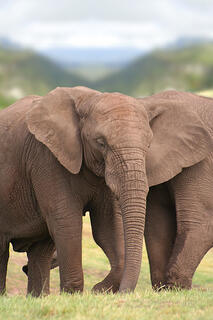
But did you know that the elephant is able to stay awake for days on end
Thats right our elephant friends are known to sleep for only two hours per day in the wild
But how and why does this occur
Over time as with all animals they have gone through natural selection to develop into a creature which thrives the best given their habitats circumstances
In the case of the elephant this means escaping predators searching for food and water sources and travelling long distances to do so
They are known to be the shortest sleeping mammal related to their body size
Less sleep means more time to travel and longer distances to be covered over a shorter period of time
Their ability to continue thriving with limited sleep is therefore an asset to this species in the wild
Lions
Lions are one of the worlds most beautiful yet highly predacious species
They are avid hunters who hunt in packs a characteristic which separates them from other members of the Felidae family
 However not all characteristics are different and this is very true when it comes to their sleeping habits
Like the domesticated cat the Lion sleeps a lot This is definitely a kitty characteristic
The lion sleeps a total of 15 to 20 hours per day In point of fact it is not unheard of for this species to even sleep for a full 24 hours
Moreover the lion is a nocturnal creature They sleep in the day time and hunt in the darkness of night This is advantageous strategy which has developed over many many years so that they may catch their prey at their weakest
Additionally like other Felidae they can see in the dark so why not have a midnight feast
Bats
Bats are another unique species when it comes to their siestas
Instead of being snuggled and curled up on the floor or on their feet the bat sleeps upside down
Hanging from trees in caves or in crevices you will find the bat having their sleep by dangling from their feet
Along with sleeping upside down the bat species is nocturnal awake at night while asleep during the day
But why the unusual sleeping habits
Sleeping upside down actually gives the bat an advantage for immediate flight if needed
Anatomically the bats hind legs are small and they cannot simply push off the ground with their muscles and fly They have had to compensate for their lack of hind muscles and therefore they instead dangle head first towards the floor let go and fly
Sleeping in this manner gives the bat species a head start from predators if needed
I guess you can say that instead of falling asleep they fall awake
Although sleeping upside down may seem very uncomfortable as it would be for us humans The bat species has specially adapted to cope and thus this sleeping habit is now an adaptation which most bat species entail and it is surprisingly the most comfortable and snuggest position for them
So which part of the bat is responsible for this peculiar style of snoozing
All is explained by the bats talons
The bats talons are specialized tendons which enable them to hang without using any muscles They simply relax and lock into place allowing them to dangle snooze and hang out for as long as necessary
Did you know that even if no longer alive they will still be locked into place unless shaken loose Thereby showing just how effective these specialized talons really are
Sea Otters
Adorable in appearance and even in their habits
We think that sea otters may just win the award for the cutest sleeping habits in the wild
The Sea Otter is known to sleep by floating on their backs on the waters surface However did you know that they even hold hands with family or groups while sleeping
This is very cute and true
Sea Otters hold hands and hold tight so that they do not drift away from each other while asleep This cute habit keeps their group together and is known as a raft
If the going gets rough the sea otter is even known to intentionally tangle themselves in kelp or seaweed so as to anchor themselves in one position
Animals and sleep deprivation
Some insects and fish do not seem to experience rebound sleep after being forced deprivation It could be that the sleep subsequent to the deprivation is more intense in these animals the way it is in humans but there is no way to measure that Available evidence suggests that mammals all have to get rebound sleep after deprivation sleep that is either longer or more intense or both
Do animals ever escape the negative consequence of sleep deprivation
Well if the deprivation is long enough it can kill animals This is certainly true for rats which have been used extensively in sleep deprivation studies Some insects also appear to die due to prolonged deprivation although insects are so different from us it is difficult to know what the cause of death is It is also difficult to tell whether animals suffer from the equivalent of the cognitive impairment that humans have and whether animals experience the lack of sleep manifests as sleepiness or fatigue the way humans make this distinction
Are there animals that do not sleep
No All animals have something like sleep even insects The lower animals with little or no brains sleep differently from humans but they exhibit periods of inactivity when they are less responsive to external stimuli
In fact research with fruit flies has shown some of the same biochemical action in them as happens in human brains during sleep The commonality points to how ancient sleep is in evolutionary terms Sleep is universal and needed by ALL LIVING CREATURESincluding by YOU If you are having sleep issues Alaska Sleep Clinic is here to get you back on track
Summary
From differences in sleeping patterns to differences in sleeping positions animals have learnt to sleep in different and unique ways in order to survive and thrive
With the elephant sleeping minimal hours and the lion sleeping all day and night
Specie specific differences are definitely a factor when it comes to all survival needs even when sleeping
Which animal has your favorite sleeping habit Have we missed something wacky and wonderful
Let us know below