


Are you getting into trouble while trying to get a kid used to the night schedule? You need to understand that a baby cannot sleep constantly and continuously and it’s OK if it wakes up during the night. Of course, all parents want their children to sleep soundly, but the truth is that not every adult can do it. Even an adult can wake up from time to time. An infant usually dreams up to 17 hours a day, that’s why there is nothing to worry about if it sometimes wakes up. However, some secrets will help get a kid to sleep at night.
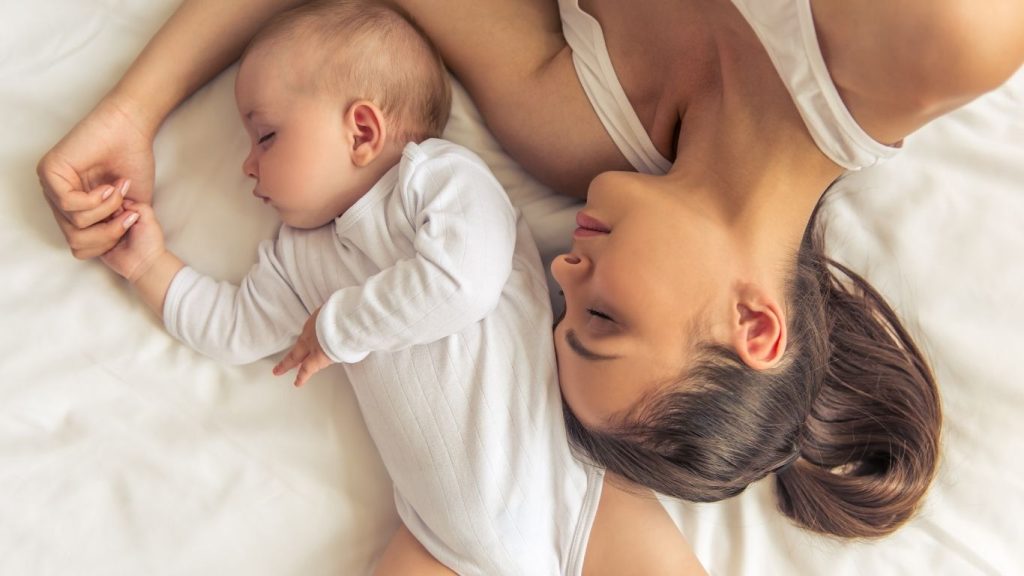
It is important to clearly define the scheduled routine eg the time of preparation for going to bed as well as the morning routine to follow Routine is the most important part of a childs lifestyle that eventually becomes a habit that can be easily performed Make your little one understand the difference between day and night sleep Keep it active during the day communicate with each other and do not reduce the level of normal daytime noise At night on the contrary do not play with a baby use dim light and reduce any noise After a while an infant will begin to understand that daytime is for games and night is for dreaming
Between the age of 2 3 months a kids sleep should gradually become independent so you need to give it a chance to fall asleep itself Just put a baby to bed and leave it alone Specialists even advise not to lull or feed before bedtime The point is that babies develop sleep related habits in childhood so if you continue feeding them in childhood the habits stay until adulthood There is also a way to get a newborn to dream on its own by leaving it crying until it calms down As a result after crying for a while a baby will fall asleep from fatigue However not all parents are ready to use this method Each age has its time and the right amount of hours for dreaming
sleep schedule for newborn is at 9 to 16 hours per day They are divided into 6 8 hours at night and the rest of the time is 3 4 days lasting 2 3 hours
sleep regime for preschoolers at 8 to 14 hours
The most suitable evening time to go to bed is between 7 pm 9 pm At a later time a child will be too tired and have difficulty falling asleep
Place for Sleeping
The kids room should be comfortable Everything matters beginning with a cozy mattress bed linen that is pleasant to the touch bright daylight should not hit the childs eyes and the air temperature in the room should not be higher than 22 23°C
If a kid dreams in their crib then it should be used only for sleeping not as a place for games It is necessary to get a baby to bed neither in the stroller nor in your bed because it is easier for the baby to fall asleep in the same place
It is important to consider the thickness of the blanket Your little one may be uncomfortable falling asleep in a blanket that is too thick The ideal thickness of the blanket for a child under three years is about 5 TOG a tog is a measure of how effectively a duvet saves heat and with age you can increase the thickness They say to buy hypoallergenic pillows and blankets if a baby is allergic to something
Keep an Eye on What Baby Eats Before Bed
Kids shouldnt eat sweet snacks before going to bed It can lead to a sudden energy jump and a child may become overexcited Some experts say that such a product as cheese at bedtime increases the chances of dreams in general therefore increases the chances of nightmares For example if a child has recently dreamed of horror it can delay until the last moment when its needed to fall asleep again Pediatricians recommend allowing snacks such as wholemeal toast apples or cakes 45 minutes before bedtime So a baby will go to bed not hungry and without a burst of energy
The dream has a restorative function for immature organisms that normalizes the bodys energy potential supports reparative and immunological processes and has an anti stress effect While a kid is dreaming there is a process of growth the formation of new structures of the body and the accumulation of energy
The infants sleep patterns during the first year of life are just a guide for parents so that they can properly distribute the babys daily routine and rest These normative indicators at any age are approximate each child has its peculiarities It means that there is no need to force a child to sleep or wake up if a childs dream is less or more than the norm
To encourage sleep independence pediatricians also encourage laying babies down when theyre drowsy but not fully asleep then letting them fall asleep on their own This way they associate sleep with independence and not relying on specific conditions that can be hard to break once theyre older
But of course while all children may not be role model sleepers there is a difference between little sleep and sleep disorders that parents should look for like snoring and frequent nightmares Our blog 7 Signs Your Child Might Have a Sleep Disorder delves deeper into these warning signs while our specialist at Alaska Sleep Clinic can provide an accurate diagnosis If you live in the Anchorage Alaska area you can call for a free 10 minute consultation or schedule a sleep study today