

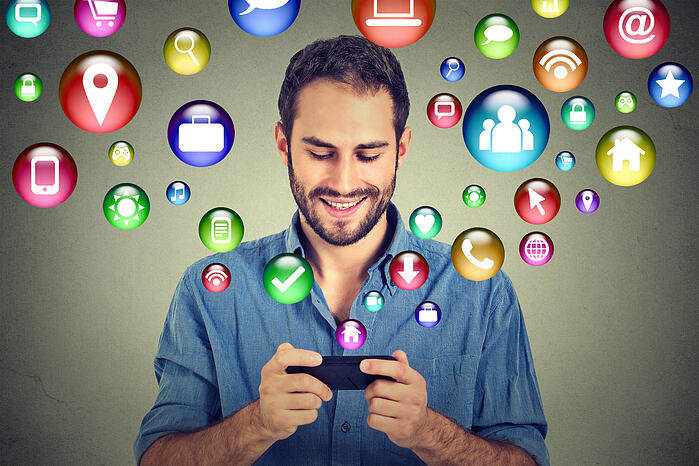
The good news is that they arent if used wisely and within some reasonable limits But the bad news is that binging on social media might affect our sleep habits and general health and not for good
Social Media and Circadian Rhythms
There are complex relations between gadgets as a whole social media in particular and our circadian rhythms The scientists are still doing their research to find out the mechanism that connects these things But there are already proven phenomena such as sleep deprivation connected with social media and social media induced depressions and addictions
Social media is a place of concentrated emotions Lots of pages deliberately post heavily emotional content and people on these platforms arent restricted with morals and politeness that govern us in real life Some people can even worry about the popularity of their social profiles Thankfully their problems can be solved by review websites like Likes Finder But the emotional impact of social media is still a problem
The notorious saying its the Internet baby doesnt play well with our emotions The stress and negative or even highly positive just overwhelming feelings can cause anxiety or depression and these states affect our sleeping habits a lot
The Special Hormone Melatonin
But the emotional factor isnt the only one Our brain knows when to go to sleep thanks to melatonin a special hormone that is created in our body when our circadian rhythm enters the sleeping phase When the level of melatonin in our blood is high enough we fall asleep But this hormone is also heavily dependent on the level of light registered by our eyes
Humans as a species are mostly daily creatures The night owl type is an anomaly created by our evolution as sentinels who guarded primordial tribes at night and shooed away night predators But nowadays the artificial lights and the very schedule of modern life creates a situation when we only have our personal time free of work chores or whatever late at night
Our biological clock tells us to go to sleep while our common sense says that we need to enjoy life after work and our melatonin bounces from nearly enough to its still too light here because of the light from our gadgets screens We socialize and see the light at the time inappropriate for our primal biology and that messes up our sleeping habits big time
Social Media and Disturbed Sleep
The research conducted in 2014 showed a strong correlation between the time spent on social media networks and disturbed sleep Among 1788 young people aged 19 to 32 was a linear relationship between social media use and sleep disturbance
The frequency of logging into your Facebook or Instagram affects your emotional and mental state and therefore affects your health Moreover spending too much time on social media networks may create dependency Reading the news feed may become a soothing ritual before a person goes to sleep but instead of actually soothing the anxiety piles up and results in fractured night sleep even more so if you are used to reading your feed during the night
Nighttime and Blue Screens
Our brain sees social media as a gathering of fellow tribes people and activates the centers that are needed for socializing Unfortunately these parts of our brain require the most energy for example our speech center requires almost the most effort and energy in comparison to any other part of the brain
Our speech and reading abstract thinking and empathy turn on and make us highly alert which is the opposite of sleepiness No wonder that even after finishing our reading we still need an hour or two to cool down our brain and finally go to bed
Social media are also the biggest time consumers amongst all the habits except possibly smoking We spend a lot of time watching the feed even after all the messages were answered Minute after minute we lose several hours of our productive time and as a result we have to work late in the evening going to sleep much later than we had to
Youre the One in Control
Social media networks arent evil by design To improve the quality of your sleep you may just limit their usage in the evening several hours before sleep Use the social media time trackers on your gadgets set alarms or use only messengers not news feeds At first it may be quite hard to adjust to the new social media habits but if you really need to improve your sleeping routine it will be totally worth it
Evidence is mounting that the screen timesleep deprivation correlation might affect children and teenagers even more than adults The latest study comes from a high school junior who won the 2013 Intel International Science and Engineering Fair for her research that discovered that adolescents who partook in more than 35 hours of screen time a day were more likely to suffer sleep deprivation than those with only two hours of screen time
Now What
So what should you do to reduce the effects of screen time at night to possibly stave off sleep deprivation Reducing the brightness of your device can help as well as using amber colored glasses when watching a screen after the sun goes down
The obvious answer is to resist watching too much TV or using your smartphone in the hour or two before bedtime Find some other way to wind down including reading a booknot on your tablet but the 20th century way with pages and a bookmark Not turning on your television or laptop right before bed will give your brain a rest in more ways than one
If you think it may be more than too much tv or computer time contact Alaska Sleep Clinic for a free 10 minute phone consultationSocial media networks are now seen as a significant distraction factor Lots of people limit their presence there and that of their children too to less than an hour per day But are they really such a threat to ones health
The good news is that they arent if used wisely and within some reasonable limits But the bad news is that binging on social media might affect our sleep habits and general health and not for good
Social Media and Circadian Rhythms
There are complex relations between gadgets as a whole social media in particular and our circadian rhythms The scientists are still doing their research to find out the mechanism that connects these things But there are already proven phenomena such as sleep deprivation connected with social media and social media induced depressions and addictions
Social media is a place of concentrated emotions Lots of pages deliberately post heavily emotional content and people on these platforms arent restricted with morals and politeness that govern us in real life Some people can even worry about the popularity of their social profiles Thankfully their problems can be solved by review websites like Likes Finder But the emotional impact of social media is still a problem
The notorious saying its the Internet baby doesnt play well with our emotions The stress and negative or even highly positive just overwhelming feelings can cause anxiety or depression and these states affect our sleeping habits a lot
The Special Hormone Melatonin
But the emotional factor isnt the only one Our brain knows when to go to sleep thanks to melatonin a special hormone that is created in our body when our circadian rhythm enters the sleeping phase When the level of melatonin in our blood is high enough we fall asleep But this hormone is also heavily dependent on the level of light registered by our eyes
Humans as a species are mostly daily creatures The night owl type is an anomaly created by our evolution as sentinels who guarded primordial tribes at night and shooed away night predators But nowadays the artificial lights and the very schedule of modern life creates a situation when we only have our personal time free of work chores or whatever late at night
Our biological clock tells us to go to sleep while our common sense says that we need to enjoy life after work and our melatonin bounces from nearly enough to its still too light here because of the light from our gadgets screens We socialize and see the light at the time inappropriate for our primal biology and that messes up our sleeping habits big time
Social Media and Disturbed Sleep
The research conducted in 2014 showed a strong correlation between the time spent on social media networks and disturbed sleep Among 1788 young people aged 19 to 32 was a linear relationship between social media use and sleep disturbance
The frequency of logging into your Facebook or Instagram affects your emotional and mental state and therefore affects your health Moreover spending too much time on social media networks may create dependency Reading the news feed may become a soothing ritual before a person goes to sleep but instead of actually soothing the anxiety piles up and results in fractured night sleep even more so if you are used to reading your feed during the night
Nighttime and Blue Screens
Our brain sees social media as a gathering of fellow tribes people and activates the centers that are needed for socializing Unfortunately these parts of our brain require the most energy for example our speech center requires almost the most effort and energy in comparison to any other part of the brain
Our speech and reading abstract thinking and empathy turn on and make us highly alert which is the opposite of sleepiness No wonder that even after finishing our reading we still need an hour or two to cool down our brain and finally go to bed
Social media are also the biggest time consumers amongst all the habits except possibly smoking We spend a lot of time watching the feed even after all the messages were answered Minute after minute we lose several hours of our productive time and as a result we have to work late in the evening going to sleep much later than we had to
Youre the One in Control
Social media networks arent evil by design To improve the quality of your sleep you may just limit their usage in the evening several hours before sleep Use the social media time trackers on your gadgets set alarms or use only messengers not news feeds At first it may be quite hard to adjust to the new social media habits but if you really need to improve your sleeping routine it will be totally worth it
Evidence is mounting that the screen timesleep deprivation correlation might affect children and teenagers even more than adults The latest study comes from a high school junior who won the 2013 Intel International Science and Engineering Fair for her research that discovered that adolescents who partook in more than 35 hours of screen time a day were more likely to suffer sleep deprivation than those with only two hours of screen time
Now What
So what should you do to reduce the effects of screen time at night to possibly stave off sleep deprivation Reducing the brightness of your device can help as well as using amber colored glasses when watching a screen after the sun goes down
The obvious answer is to resist watching too much TV or using your smartphone in the hour or two before bedtime Find some other way to wind down including reading a booknot on your tablet but the 20th century way with pages and a bookmark Not turning on your television or laptop right before bed will give your brain a rest in more ways than one
If you think it may be more than too much tv or computer time contact Alaska Sleep Clinic for a free 10 minute phone consultation