

The findings in the 18 year study confirm smaller studies that have indicated an increased risk of death for people with apnea also known as sleep disordered breathing
This is not a condition that kills you acutely It is a condition that erodes your health over time Dr Michael Twery director of the National Center on Sleep Disorders Research said in a telephone interview
People with such disorders have been sleep deprived for perhaps very long periods of time they are struggling to sleep If this is happening night after night week after week on top of all our other schedules this is a dangerous recipe said Twery whose centre is part of the National Heart Lung and Blood Institute
The institute estimates 12 million to 18 million people in the US have moderate to severe apnea The condition is not always detected because the sufferer is asleep when the problem occurs and it cannot be diagnosed during a routine office visit with a doctor
Researchers tested the patients for sleep disordered breathing in the laboratory and then followed them over several years
Sleep pattern disturbed during night
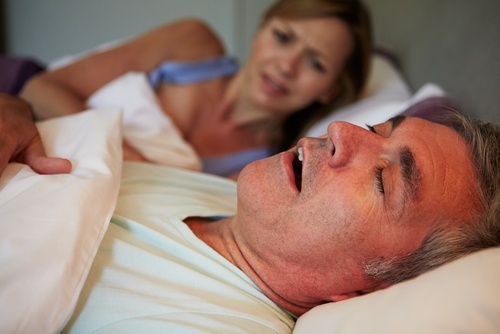
For people with apnea their upper airway becomes narrowed or blocked periodically during sleep That keeps air from reaching the lungs In some cases breathing stops for seconds to a minute or so the pauses in breathing disrupt sleep and prevent adequate amounts of oxygen from entering the bloodstream
When you stop breathing in your sleep you dont know it it doesnt typically wake you up Twery said Instead it can move a person from deep sleep to light sleep when breathing resumes But their overall sleep pattern is disturbed and it can happen hundreds of times a night
He said a person typically will have four or five cycles per night of light sleep deep sleep and REM rapid eye movement sleep when most dreams occur More deep sleep comes early in the night with more REM sleep closer to waking up This pattern helps control hormones metabolism and levels of stress
Apnea linked to health problems
The institute part of the National Institutes of Health NIH says apnea has been linked to a greater risk of heart disease high blood pressure stroke diabetes and excessive daytime sleepiness
In the new report the Wisconsin Sleep Cohort followed 1522 men and women ages 30 to 60 The annual death rate was 285 per 1000 people per year for people without sleep apnea
People with mild and moderate apnea had death rates of 554 and 542 per 1000 respectively and people with severe apnea had a rate of 146 researchers said
Cardiovascular mortality accounted for 26 percent of all deaths among people without apnea and 42 percent of the deaths among people with severe apnea according to the researchers led by Terry Young of the University of Wisconsin Madison
Apnea often is treated with a device that delivers continuous positive airway pressure through a mask over the nose and or mouth The US study found that patients using this device had reduced death rates
The US research was supported by the NIH The Australian study was supported by the Australian National Health and Medical Research Council