

5 Most Effective Central Sleep Apnea Treatments
Posted by Jennifer Hines
Find me on Facebook
on Jan 18 2020 11000 AM
Unlike sleep disorders that are easier to diagnose and understand central sleep apnea CSA can be baffling
CSA patients might not snore may be at their ideal weight and may have not had a history of sleep disorders yet still find themselves with the condition characterized by pauses in breathing many times during the night
Central sleep apnea is a neurological conditionin other words the brain is not sending the correct signals to the respiratory system to keep breathing while the patient sleeps Sometimes another medical condition causes CSA sometimes pain medication can lead to it and sometimes the apnea occurs for no known reason
Whatever the cause treatments are available for central sleep apnea Here five of the most effective ways to help the CSA patient
Central Sleep Apnea Treatments
Treating the medical condition that is also causing central sleep apnea Congestive heart failure or the aftermath of a stroke can interfere with night time breathing and lead to CSA The solution here is simple Treat the heart failure or the stroke and the apnea will likely subside
Cutting back or eliminating the use of opiods Studies have proved that more powerful pain medications such as morphine codeine and oxycodone can cause central sleep apnea Reducing the dosage or not taking them altogether can help but discussing this option with your doctor and with a sleep specialist is important Pain medications do just thathelp with pain and trying to fix the apnea might not be worth additional suffering when you are awake
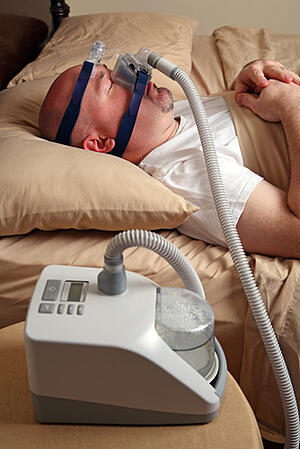
Continuous positive airway pressure CPAP More commonly associated with obstructive sleep apnea OSA a CPAP device can also help CSA sufferers particularly those who are recovering from heart failure With this treatment the patient wears a mask that continuously delivers a constant pressure of air to the lungs thus countering any inclination the body might have to pause breathing
Bilevel positive airway pressure BPAP This is another treatment used for OSA sufferers that can be effective for central sleep apnea patients Similar to a CPAP mask a BPAP device adjusts the amount of air delivered to the lungs depending on whether the patient is inhaling or exhaling
Adaptive servo ventilation ASV Yet another device that uses a mask ASV goes one step further by continuously detecting and adjusting to the patients breathing needs and delivering the correct amount of oxygen If the user is breathing fine the device reduces the air it provides It the patients breathing begins to pause ASV increases the oxygen
Phrenic Nerve Stimulation Phrenic Nerve Stimulation is a new FDA approved therapy for moderate to severe central sleep apnea in adult patients Phrenic nerve stimulation is delivered by a pacemaker like implantable device that stimulates a nerve in the chest phrenic nerve to send signals to the diaphragm to control breathing It monitors respiratory signals while you sleep and helps restore normal breathing patterns Because the device is implantable and turns on automatically during sleep it does not require wearing a mask
Phrenic nerve stimulation allows normal breathing to resume by stabilizing carbon dioxide preventing apneic events and the subsequent period of rapid breathing
Of course the most effective treatment will vary from patient to patient so discussing these options with a sleep specialist is crucial in determining how best to alleviate central sleep apnea
Do you think you or your sleep partner may be suffering from central sleep apnea Contact Alaska Sleep Clinic we offer a free 10 minute phone consultation to help you figure it outWhat symptoms are making you wonder if you or your loved one has central sleep apnea